Cozy Home on a Budget: 9 Simple Ways to Create a Home Sanctuary
You do not need a new sofa, matching furniture set, or a house that looks like it belongs in a magazine to make home feel cozy.
Sometimes it is much simpler than that.
- A warmer lamp.
- A blanket where you actually use it.
- A little less stuff staring at you from every surface.
- Music or rain sounds in the background.
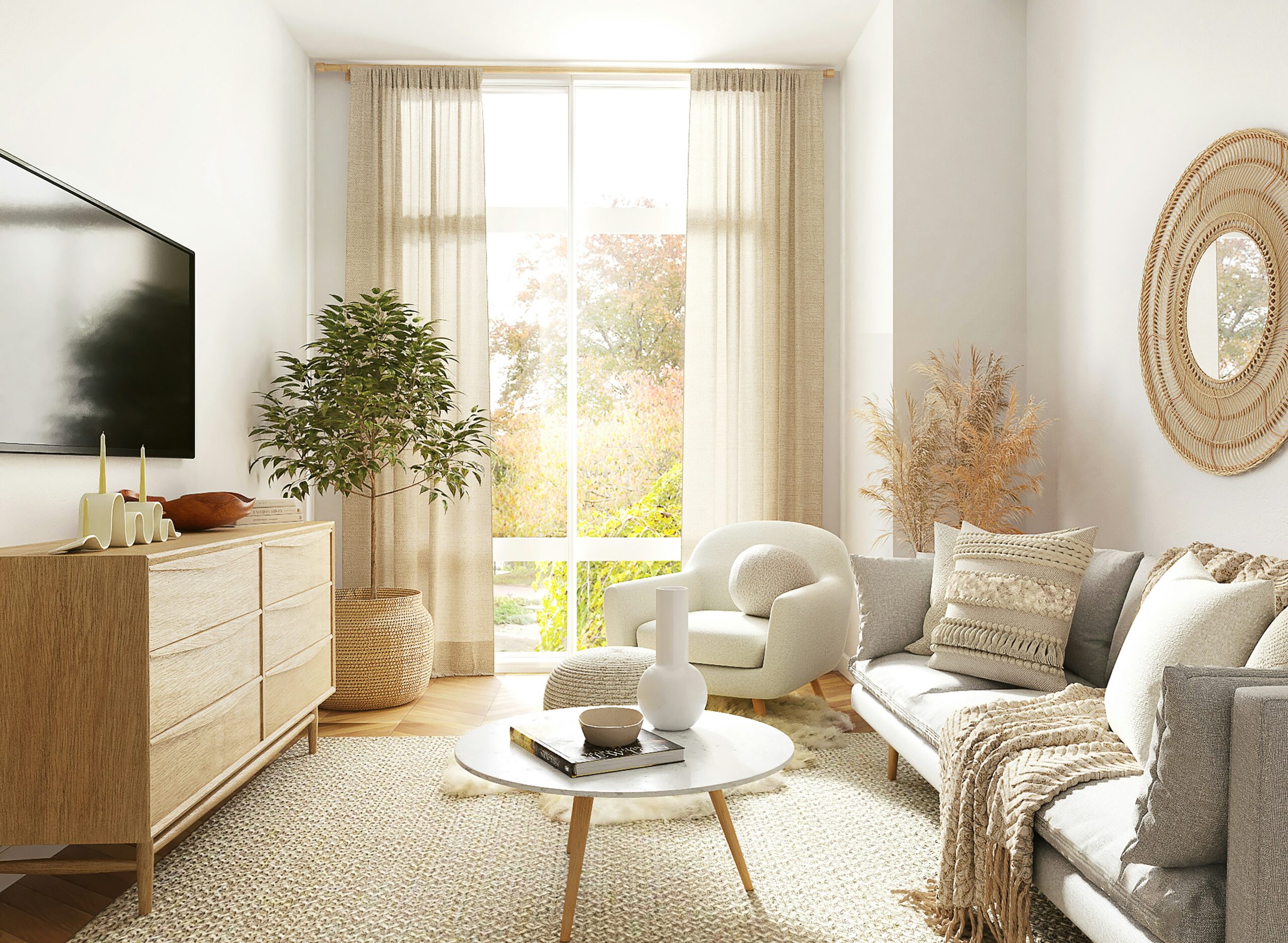
- Curtains that let the afternoon light in.
Creating a cozy home on a budget is less about buying more and more about being intentional with what is already there.
And honestly? That is good news, because your home does not need another shopping haul.
What actually makes a home feel cozy?
There is no single formula for coziness. It is partly visual, partly sensory, and partly about how easily you can relax in the space.
Research on homes and wellbeing is still developing, but there are some useful clues.
One study of 60 dual-income couples found that women who described their homes as more cluttered or unfinished had less healthy daily cortisol patterns. The study shows an association, not proof that clutter itself causes stress.
Source: Saxbe and Repetti home study
Other research has also found associations between perceived clutter, people’s relationship with their homes, and wellbeing. One large study of 1,111 adults found that subjective clutter was associated with wellbeing, while another study found possession clutter was negatively associated with psychological home and perceived wellbeing.
Source: 2021 Journal of Environmental Psychology study
Source: 2016 clutter and wellbeing study
So no, clearing your coffee table is not a medically proven cortisol hack.
But if looking around your home and seeing fewer unfinished little tasks makes the room feel easier to live in, that matters too.
The goal is not perfection.
The goal is a home that feels like somewhere you can exhale.
1. Start with the light you already have
Lighting can change the personality of a room without changing the room itself.
If your home currently has one bright overhead light doing absolutely everything, try giving it some competition.
A warm bulb around 2700K is a classic choice for residential spaces. The U.S. Department of Energy describes 2700K light as “friendly” and “personal,” while 3000K is also commonly used in homes.
Source: U.S. Department of Energy: Choosing energy-efficient light bulbs
You do not need to replace every bulb.
Try this instead:
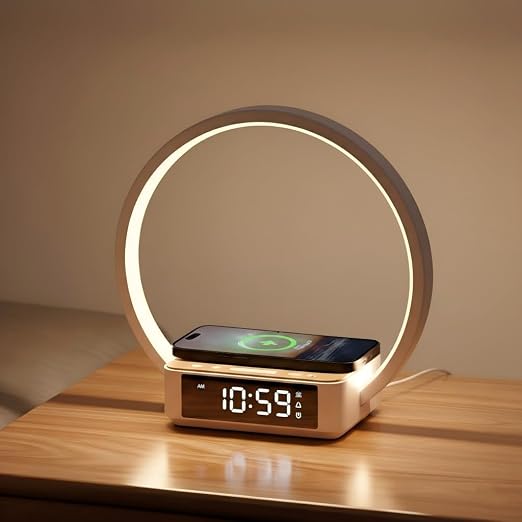
- Put a small lamp in a dark corner.
- Use a fabric lampshade if you already have one.
- Move a table lamp somewhere you actually sit.
- Use a dimmer where practical.
- Turn off the big overhead light in the evening and use two or three smaller light sources instead.
That last one is particularly useful after dark.
A study from Harvard Medical School and Brigham and Women’s Hospital found that ordinary room light before bedtime suppressed melatonin and shortened the duration of the body’s melatonin signal compared with dim light.
Source: Study on evening room light and melatonin
That does not mean you need to sit in complete darkness at 7 p.m.
It simply gives another reason to make your evening lighting softer and less intense.
And, aesthetically, the shadows from several low lamps are just much nicer than one ceiling light announcing every crumb in the room.
2. Make one sitting spot ridiculously comfortable
You do not need to redecorate the entire living room.
Pick one place.
Maybe it is the end of the sofa. Maybe it is your favorite chair. Maybe it is the corner where you drink your morning coffee.
Make that one spot feel inviting.
Add a throw you already own. Put a pillow there. Keep a book nearby. Move a small table closer if you have one.
This is one of the easiest ways to make your home feel more intentional because you are creating a little destination rather than trying to transform an entire room.
And if your current textiles are cotton, linen, wool, or another fabric you already like touching, use them.
There is no need to buy a specific “cozy” fabric because the internet told you so.
There is some limited research around wool sleepwear and sleep, including a small randomized crossover study in adults aged 50 to 70. It found some sleep benefits for wool under warm conditions, but the research was small and was supported by Australian Wool Innovation, so it is better treated as interesting evidence than proof that wool makes a home—or a person—more relaxed.
Source: Wool sleepwear study
For a home, comfort and personal preference are enough reason to choose a blanket you actually enjoy using.
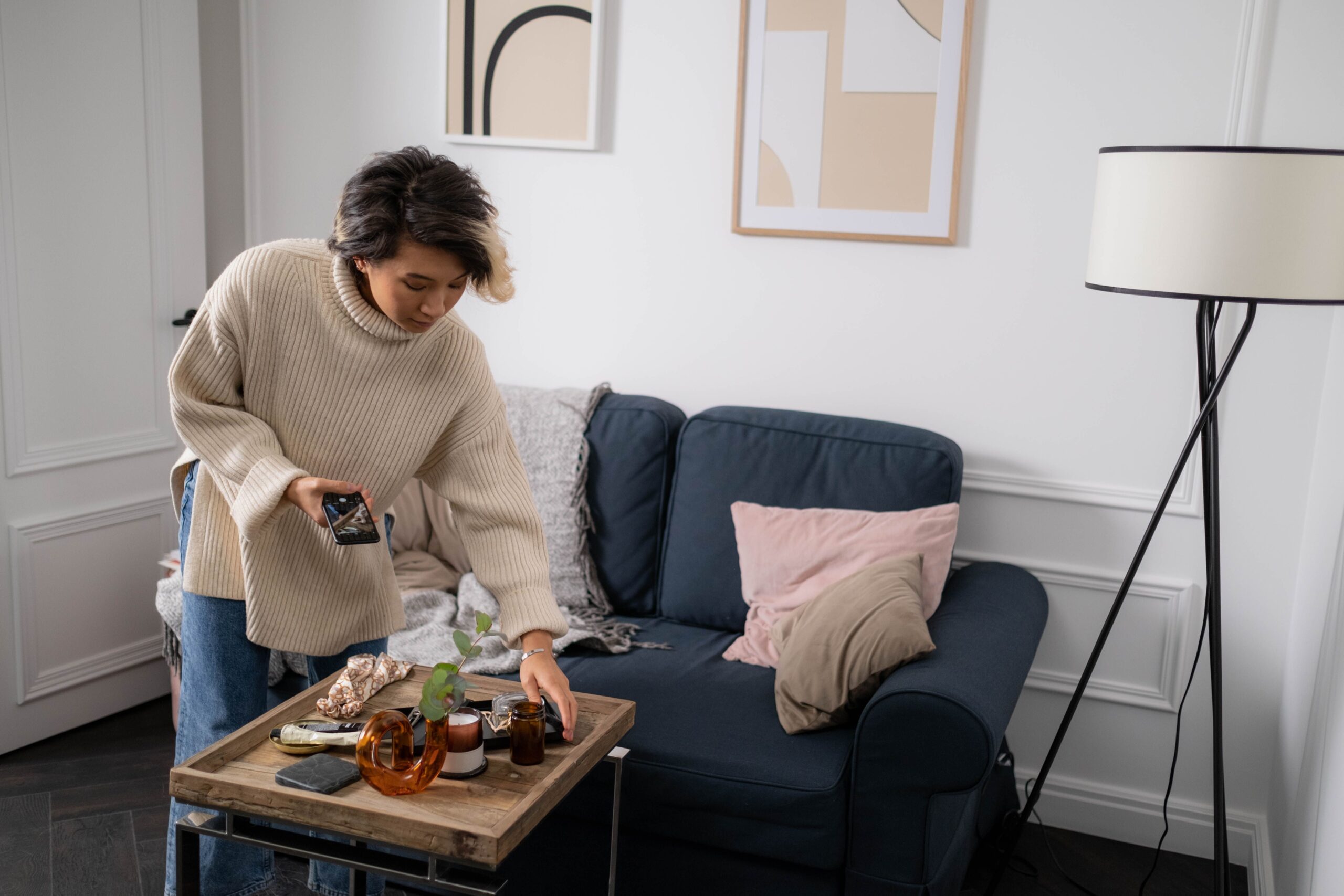
3. Give your eyes somewhere to rest
This is where decluttering comes in.
Not the dramatic, “throw away everything you own” version.
Just visual breathing room.
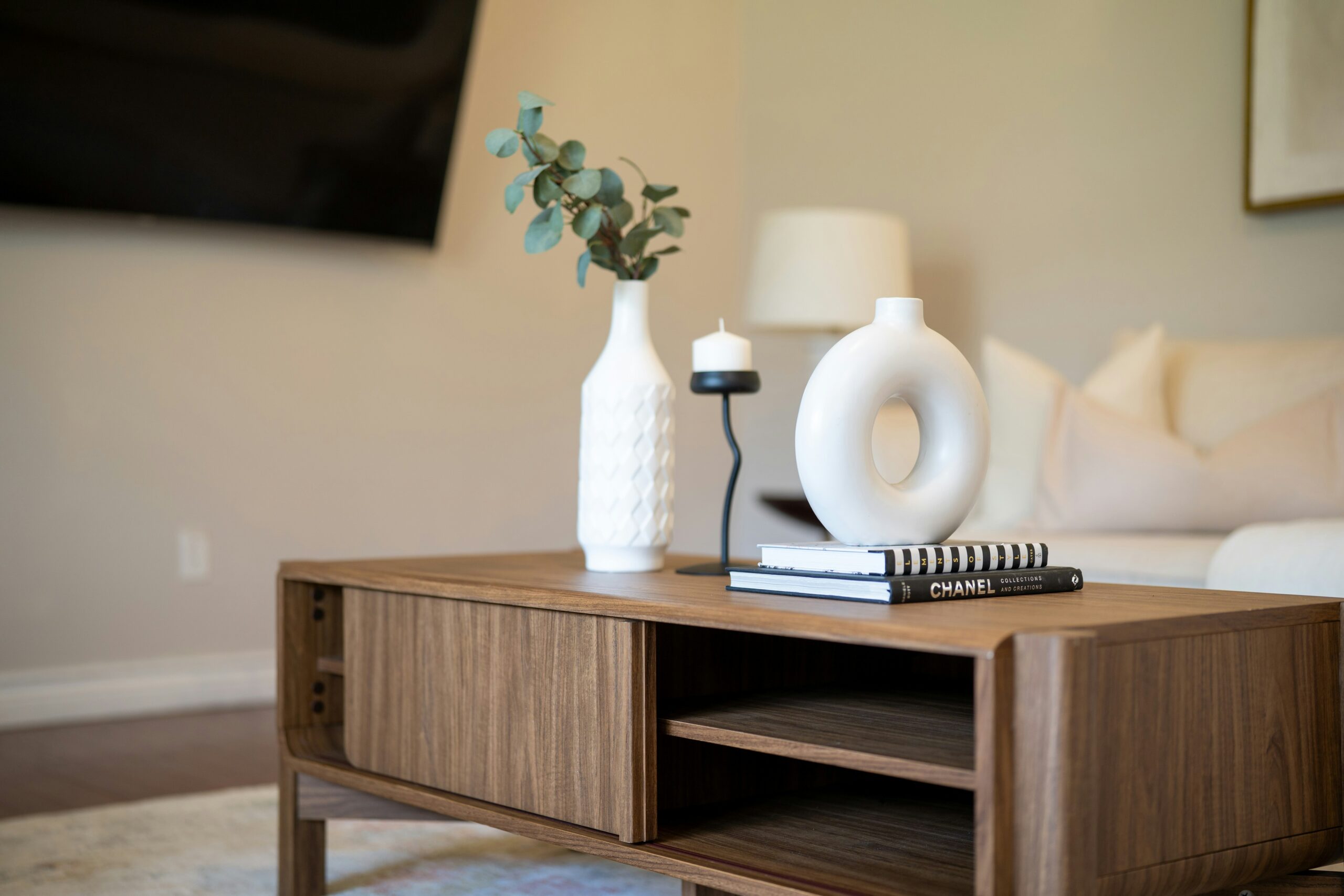
Look at the surfaces you see most often: your coffee table, kitchen counter, bedside table, entryway, or TV stand.
Choose one.
Take everything off it.
Then put back only what you genuinely want there.
Maybe that means a lamp, a bowl, and one small object you love.
Maybe it means absolutely nothing.
That empty space is allowed to exist.
Research has found associations between clutter and wellbeing, but it is important not to turn that into a promise that decluttering will automatically lower your stress hormones. The evidence does not support that specific claim.
Instead, think of it practically:
Less visual noise can make a room feel easier to look at and easier to maintain.
And if one cleared surface makes you want to tackle another, wonderful.
If you stop after one?
Also wonderful.
For a bigger reset, you can pair this with Little Home US’s Realistic Sunday Reset Routine, especially if your home tends to get messy in the same handful of places every week.
You do not need to deep-clean the whole house to make it feel better.
Start where your eyes keep landing.
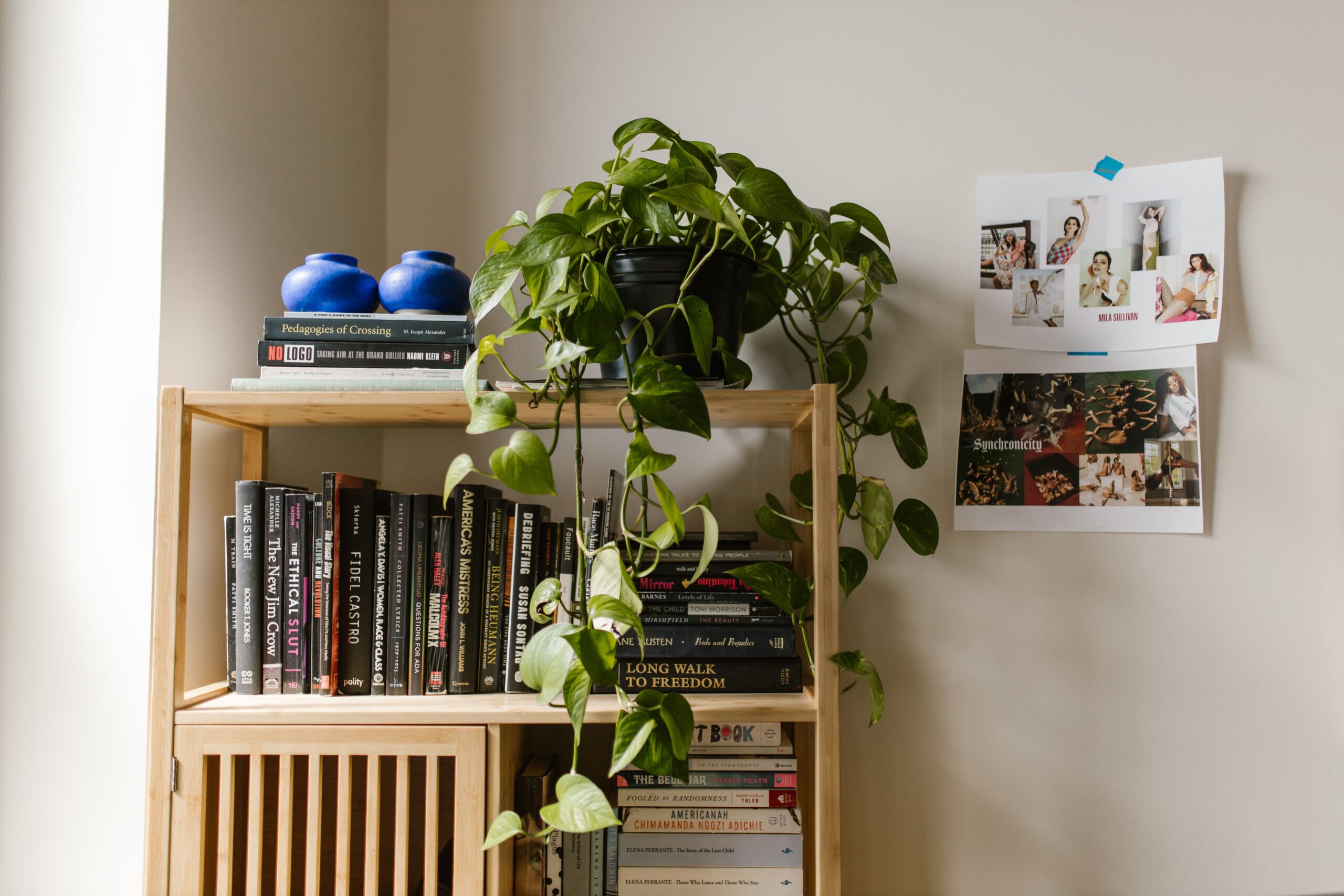
4. Let natural light do some of the decorating
Before buying another lamp, look at your windows.
Are they dusty?
Is a bulky piece of furniture blocking half the light?
Are your curtains covering more glass than they need to?
Small changes can make a room feel noticeably brighter.
Try:
- Cleaning the windows.
- Moving bulky furniture away from the window.
- Using sheer or lighter curtains.
- Placing a mirror near or opposite a window.
- Keeping the area immediately around the window relatively open.
If you are changing curtains, there is also a simple design trick worth knowing: hanging the curtain rod several inches above the window frame and extending it beyond the sides can make the window feel larger and allow more light through when the curtains are open. Designers commonly recommend around 4–6 inches above the frame, although the exact placement depends on the room and window.
You do not need to buy new curtains just for this.
If your current ones work, leave them alone.
Cozy is not a synonym for “new.”

5. Add sound—not just things to look at
This might be one of the cheapest ways to change the atmosphere of your home.
Sound is part of your environment too.
A 2021 systematic review and meta-analysis published in PNAS looked at 18 studies and found evidence that natural sounds were associated with lower stress and annoyance and improved health and positive affect outcomes. Water sounds showed the strongest overall effect for health and positive affect, while bird sounds showed the strongest effect for stress and annoyance in the analysis.
Source: PNAS review on natural sounds
And you do not need an indoor fountain.
Try:
- Rain sounds while you read.
- Birds outside an open window.
- A nature-sound playlist.
- Quiet background music.
- Simply turning off the television when nobody is actually watching it.
Sometimes making a home feel calmer is less about adding something and more about removing the constant noise.

6. Use scent carefully
Scent can be lovely.
It can also be a terrible idea for someone who is sensitive to fragrance.
Research by Anne Steinemann found that 34.7% of surveyed U.S. adults reported health problems when exposed to fragranced consumer products, including symptoms such as headaches and respiratory difficulties.
Source: Fragrance exposure research
So please do not interpret “cozy home” as “make the entire house smell like vanilla.”
If you enjoy scent and it works for your household, keep it simple.
Open the windows.
Bake something.
Use the natural smell of clean laundry or fresh food.
A stovetop simmer pot with things like orange peel and cinnamon can also make a kitchen smell lovely, but if you use one, stay in the kitchen and keep an eye on it. The National Fire Protection Association identifies unattended cooking as the leading cause of kitchen fires.
Source: NFPA home cooking safety guidance
And if you use candles, keep them well away from anything that can burn—or choose flameless candles instead.
If you have pets, be especially careful with essential oils and diffusers. The ASPCA advises keeping oils out of pets’ reach and notes that birds are particularly sensitive to essential-oil diffusers.
Source: ASPCA guidance on essential oils around pets
The point is not to make your home smell like a candle shop.
It is to make the room pleasant for the people—and animals—actually living in it.
7. Rearrange before you buy
This is my favorite budget decorating rule:
Shop your house first.
Before buying a new basket, pillow, side table, vase, or piece of wall art, walk through your home and look at what you already own.
That lamp in the bedroom might work beautifully in the living room.
Those books stacked in a cupboard might look better on an open shelf.
The basket holding random things in the hallway might become useful storage beside the sofa.
A ceramic bowl you never use might become your new catch-all for keys.
You can also make a room feel more pulled together with simple grouping.
Try grouping objects in twos or threes. Stack some books horizontally. Put larger baskets lower down on shelving. Mix practical pieces with a few personal things.
The aim is not to make your shelves look staged.
They should still look like someone lives there.
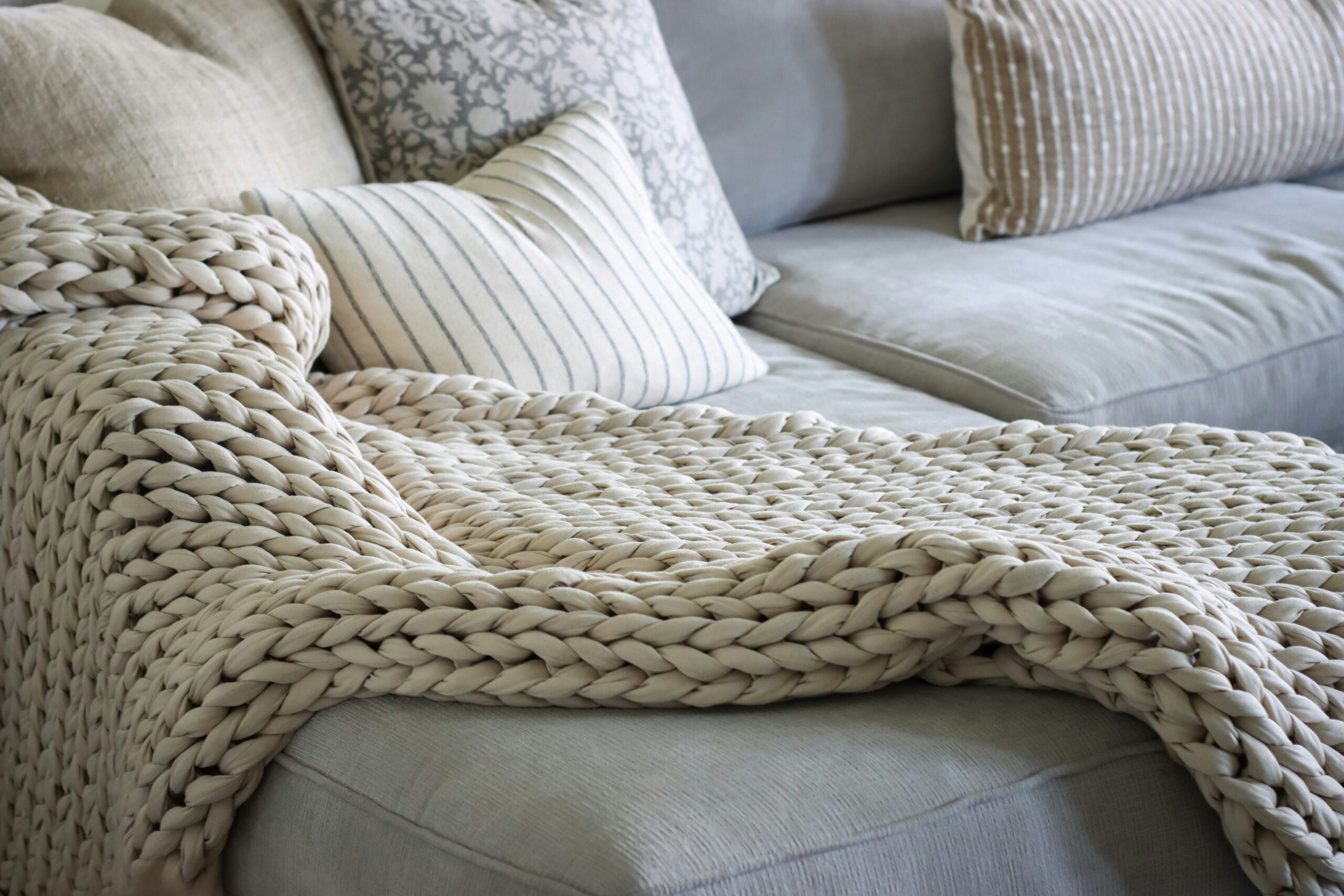
8. Use textiles and rugs to anchor the room
If you have a small decorating budget, textiles are often an easier place to start than furniture.
A new pillow cover can change the feel of a sofa without replacing the sofa.
A throw can add warmth to a chair.
A rug can help visually connect the furniture around it.
And you do not need to follow every rug rule you see online.
Houzz notes that common area-rug rules can contradict each other, so the practical question is whether the rug works with your furniture and room rather than whether you have followed one magic measurement.
Source: Houzz: Area rug rules and how to break them
If you already have a rug, try repositioning it before replacing it.
Sometimes the room does not need new stuff.
It needs a different arrangement.

9. Create a little more “you” and a little less “showroom”
A cozy home should not look like nobody is allowed to touch anything.
Bring in the things that make the space feel like yours.
- Books you actually read.
- Photos.
- A thrifted ceramic piece.
- A plant.
- Something handmade.
- A souvenir from somewhere you loved.
- A slightly imperfect object that has a story.
You can also mix wood tones rather than trying to make every wooden item in your home match perfectly. One common design approach is to work with a base wood tone, a contrasting tone, and a smaller accent rather than collecting endless shades.
The same idea applies to décor generally.
You need some repetition so the room feels connected.
You also need enough variation that it does not feel like a furniture showroom.
And if you have one larger statement piece—a rug, artwork, mirror, or substantial textile—it can often do more visually than a pile of tiny decorative objects.
If you want to lean further into warm, layered color rather than a strictly neutral palette, we wrote a whole piece on why chocolate brown and rich earth tones are having a real moment in homes right now: Why Chocolate Brown and Rich Earth Tones Are Taking Over Homes This Fall.

The five-minute cozy home reset
You do not need an entire afternoon.
Try this the next time your home feels a little… meh.
- Minute 1: Clear one visible surface.
- Minute 2: Put away five things that have wandered from their homes.
- Minute 3: Open a curtain or window and let in some light or fresh air.
- Minute 4: Turn on a small lamp instead of the overhead light.
- Minute 5: Put on music, rain, birdsong, or simply enjoy the quiet.
That is it.
No matching storage containers.
No twelve-step cleaning routine.
No shopping required.
And importantly, there is no promise here that five minutes will magically reduce your cortisol or fix your stress.
Sometimes a five-minute reset is simply a five-minute reset.
But a home made up of lots of tiny choices can start to feel very different from one that is constantly asking you to do more.
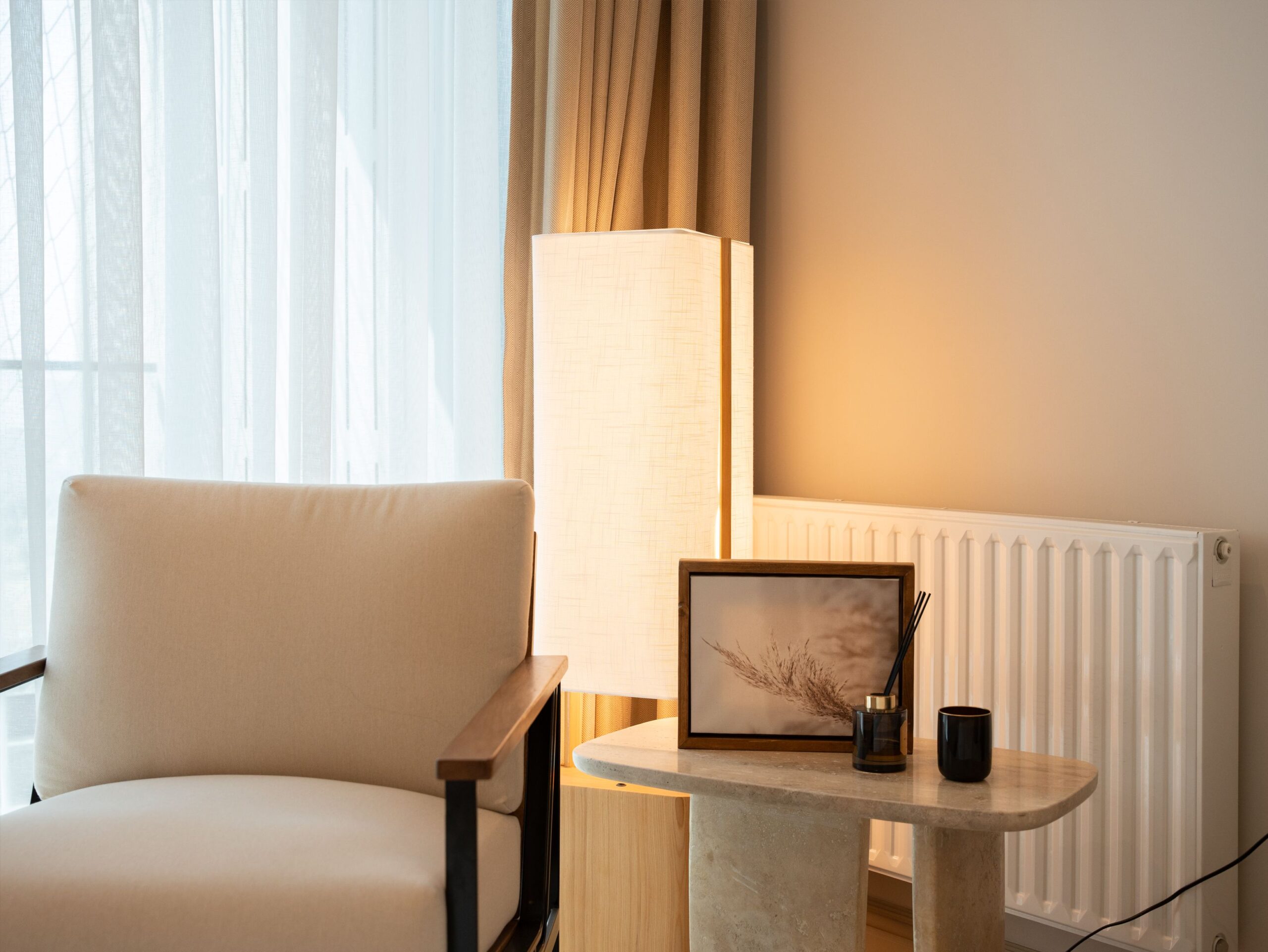
Your Cozy Home on a Budget Does Not Have to Be Expensive
The internet can make coziness look surprisingly expensive.
- A boucle chair.
- A giant rug.
- Perfect shelves.
- A $200 candle.
- Six matching baskets that apparently need to be “styled.”
Please ignore all of that for a minute.
A cozy home on a budget can be a room where the lighting is kind to your eyes at night.
A sofa with a blanket thrown over the arm.
A window you actually open.
A kitchen that smells like something you baked.
Birdsong coming through the window.
A few objects you genuinely love.
And enough empty space that you can put your keys down without knocking over seven decorative objects.
That is a home sanctuary too.
A simple place to start
If you want to make your home feel cozier without turning it into a weekend-long project, choose one room and one sensory change.
Maybe you soften the lighting.
Maybe you clear one surface.
Maybe you move the furniture.
Maybe you add a textile you already own.
Maybe you simply open the curtains and let the room breathe.
You do not have to finish the whole house.
Start with the part of home you use most.
Then see how it feels.
And yes, you can do it without buying a whole new house.
Research & further reading
- U.S. Department of Energy — Purchasing Energy-Efficient Light Bulbs
- Saxbe & Repetti — No Place Like Home
- Buxton et al. — A Synthesis of Health Benefits of Natural Sounds
- Harvard/Brigham study — Light exposure and melatonin
- Chow et al. — Sleepwear Fiber Type and Sleep Quality
- Steinemann — Fragranced Consumer Products and Health Effects
- National Fire Protection Association — Cooking Safety
- ASPCA — Essential Oils Around Pets
- Houzz — Area Rug Rules and How to Break Them