
What Is PFAS? Where Forever Chemicals May Hide in Your Kitchen
PFAS get talked about a lot, and the headlines can make an ordinary kitchen sound scary. Here is what the term means, where it may show up around your stove, and how to swap things slowly without panic.
This post may contain affiliate links. If you buy through them, I may earn a small commission at no extra cost to you. It is general information, not medical advice.
The short version
PFAS are a big family of long lasting chemicals, and your pans are only one small source. You do not need to panic or throw things out. Check what your pans are made of, replace damaged nonstick, and look at your water report next.
What are PFAS, exactly?
PFAS stands for per and polyfluoroalkyl substances, a large family of manufactured chemicals. They have been used in products where resistance to grease, water or heat is useful. The phrase “forever chemicals” describes how long many PFAS last in the environment. It does not mean every compound behaves the same way in the body, or that every exposure causes illness.
Why do people worry about PFAS?
Scientists study PFAS because some of them persist and build up, and exposure to certain PFAS has been linked with health effects. Findings differ by compound, dose, exposure route and population. The research does not tell us that your frying pan has caused a health problem. Drinking water, food, dust and workplace exposure may all matter.
Where PFAS may appear in a kitchen
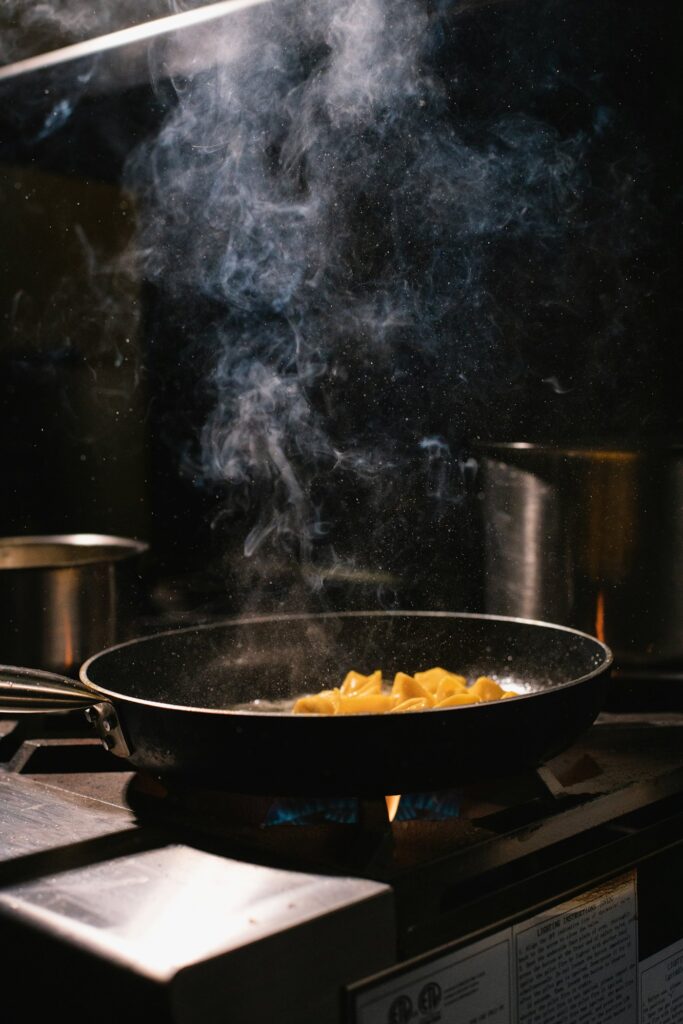
Some conventional nonstick coatings use PTFE, a fluoropolymer that is part of the wider PFAS conversation. Grease resistant food packaging has also been a use in the past, although rules and manufacturing practices have changed. A label that says “PFOA free” does not necessarily mean “PFAS free”, so ask whether PTFE or other fluorinated substances are used.
What about nonstick cookware?
Nonstick pans are handy, especially for delicate foods. Follow the maker’s temperature limits, avoid preheating an empty coated pan, ventilate while you cook, and replace a pan when the coating is peeling or badly damaged. A scratch does not automatically mean a harmful dose. Stainless steel and cast iron are options if you would rather avoid fluoropolymer coatings.
How to shop with clearer questions
Look for a precise materials statement instead of broad marketing words. Ask what the cooking surface is made of, whether PTFE is present, what temperatures the maker allows, and how to clean it. A certification or a clear material description tells you more than a generic “clean” label.

A realistic kitchen audit
Start with the items you use most. Check the bottom of your pans or the packaging, read the care instructions, and decide what really needs replacing. There is no need to throw out working equipment overnight. If you change just one thing, a durable uncoated skillet is a versatile place to start.
A calmer way to think about it
It is easy to read one headline about forever chemicals and want to empty every cupboard. Try to hold two things at once. PFAS are worth taking seriously, and your kitchen is only one small piece of a much bigger picture. Most of the large studies you will see in the news are about drinking water and industrial areas, not about someone making scrambled eggs on a Tuesday.
So the goal is not a perfect kitchen. The goal is to lower what you can reasonably control, slowly, without spending money in a panic. That might be one pan, one container, or one look at your water report.
What you can control and what you cannot
You can choose your cookware, keep your pans at sensible temperatures, and check what is in your local water. You can also cook at home more often, which means fewer trips through takeout packaging. These are real, doable things.
You cannot control everything in the dust, the food supply or a restaurant kitchen, and it does not help to lie awake over it. If your water is a concern in your area, the [water filter guide](/how-to-filter-tap-water-at-home/) is a good next read, because water is one of the main routes people hear about.
Food packaging and takeout
Some grease resistant packaging has used PFAS in the past, which is why wrappers and takeout containers come up in this conversation. Many makers have moved away from them and rules have changed, but it is worth checking current information instead of assuming. A simple habit is to move takeout into your own plate or glass container when you get home, especially for hot food.
If you are pregnant or have a health concern
If you are pregnant, nursing, or worried about a specific health issue, talk to your doctor instead of leaning on a blog post, including this one. They can tell you what matters for you.
How I would fit this into a normal week
Pick one small thing a week. Week one, look at the bottom of your pans and note what they are. Week two, check your water report. Week three, move leftovers into glass. Week four, decide whether one pan really needs replacing. That is a month of calm, useful changes with no big spend.
Quick questions
Is PFOA free the same as PFAS free?
No. PFOA is one PFAS compound. A pan can be PFOA free and still use PTFE or other fluorinated materials. Look for a clear statement from the maker about PTFE and PFAS.
Are ceramic coated pans always PFAS free?
Not automatically. Many ceramic coatings are sold as PTFE free, but check the product page or ask the maker directly whether any PFAS are used.
Should I replace a scratched nonstick pan?
Makers generally advise replacing a pan when the coating is flaking or peeling. Light marks are less of a worry, but if the surface is coming off, retire it.
The swaps
Where to start when you shop.
| Instead of | Consider | Check first |
|---|---|---|
| A worn PTFE nonstick pan | An uncoated stainless steel or cast iron skillet | The maker names the material and the heat limit |
| Old takeout tubs for leftovers | Glass containers with lids | The label says oven or microwave safe if you need that |
Brand names are examples to research, not a promise. Always check current details before you buy.
Your next step
Pick the pan you use most and check what it is made of. Then read our cookware guide and the food storage guide.
Where to read more
For current information, check the EPA page on PFAS, the CDC and ATSDR PFAS pages, and the FDA updates on PFAS in food contact materials. Guidance changes, so look at the latest version.
Part of our Non-Toxic Living series
Start with Non-Toxic Living for Beginners. Next, try Cookware guide or Glass vs plastic storage.
Free Non-Toxic Home Starter Checklist
Ten small swaps, in the order that makes the most difference.
Get the free checklist