Simple, Nutrient-Dense School Night Dinners That Make Weeknights Easier
There is a very specific kind of tired that arrives around 5:30 PM on a school night.
Someone needs help with homework. Someone has lost a shoe. Someone is suddenly starving even though they ate an hour ago. And you are standing in the kitchen trying to remember whether there is anything in the fridge that can become an actual dinner.
This is why I like nutrient-dense school night dinners that are simple rather than impressive. A good nutrient-dense school night dinner does not need to be complicated to still cover the basics.
You do not need seven perfectly planned recipes, matching meal-prep containers, or a fridge full of pre-chopped vegetables. You need a few dependable ingredients, a loose plan, and dinners that can bend when the evening inevitably does.
The goal is not to make every dinner perfect.
It is to make Tuesday dinner possible.
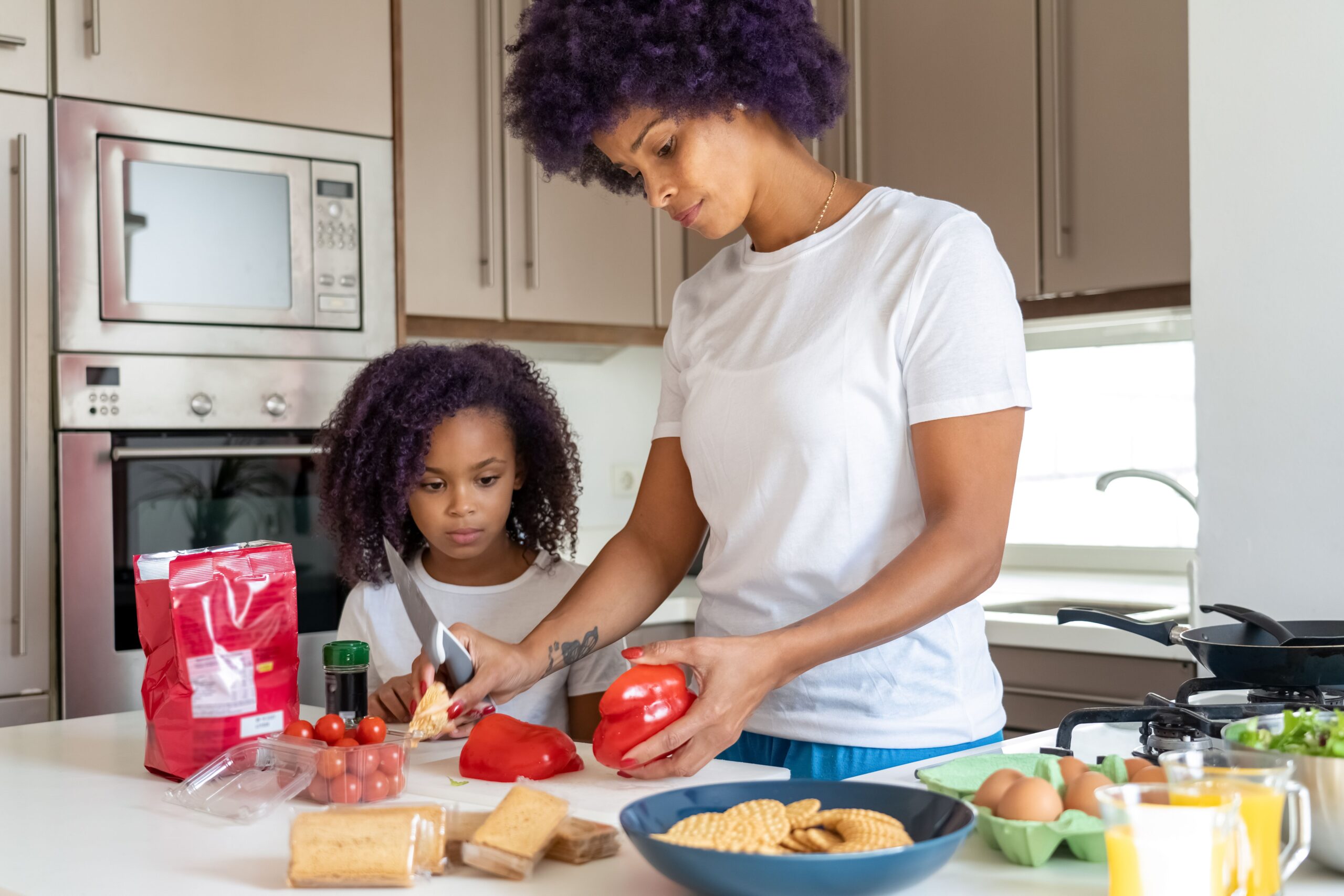
What Makes Good Nutrient-Dense School Night Dinners?
For a regular family dinner, I like thinking in terms of a few broad categories rather than counting nutrients or measuring portions.
Try to include:
- A protein: eggs, chicken, fish, beans, lentils, tofu, cheese or another protein your family enjoys
- A vegetable or fruit: fresh, frozen, cooked or raw
- A grain or starch: rice, potatoes, pasta, whole-grain bread or tortillas
- A little fat or flavorful addition: avocado, olive oil, cheese, pesto, a sauce or dressing
That gives you a useful framework without turning dinner into a math problem.
The current 2025–2030 Dietary Guidelines for Americans emphasize whole, nutrient-dense foods and include vegetables, fruits, whole grains, protein foods, dairy and healthy fats as part of healthy eating patterns.
Source: CACFP summary of the 2025 to 2030 Dietary Guidelines and Columbia University Tisch Food Center analysis
And importantly, you do not have to hit every category perfectly at every single meal.
Sometimes dinner is beautifully balanced.
Sometimes it is scrambled eggs, toast and fruit because it is Wednesday and everyone has had enough.
Both can exist.
The easiest way to make school night dinners less chaotic
I would not start by planning seven completely different dinners.
Instead, think in building blocks.
On the weekend—or whenever you have a little more breathing room—prepare one or two things that can appear in different meals during the week.
For example:
- Cook a pot of rice or another grain.
- Roast a tray of vegetables.
- Cook chicken or another protein.
- Make a batch of beans.
- Wash some fruit.
- Hard-boil a few eggs.
- Keep tortillas, pasta or bread available for quick meals.
Now Monday’s chicken can become Tuesday’s tacos.
The rice can become fried rice.
The roasted vegetables can go into quesadillas.
The beans can become bowls.
This is less about “meal prepping” and more about giving Future You somewhere to start.
There is no good evidence that cooking individual building blocks is scientifically superior to preparing complete meals. Both can work. Building blocks simply give you more flexibility, while soups, casseroles and similar assembled meals can be particularly convenient for freezing.
And if you are someone who hates eating the same meal three nights in a row, building blocks may be much easier to live with.

A note about leftovers
This is the boring part, but it matters.
USDA guidance says perishable food should be refrigerated within two hours, stored in shallow containers for quicker cooling, and most cooked leftovers should be used within three to four days. Leftovers should be reheated to 165°F.
Source: USDA FSIS: Leftovers and food safety
So if you are doing Sunday prep, you do not necessarily need to cook five days of food and keep it all in the refrigerator.
Prepare what you will realistically eat within the safe window, and freeze the rest when appropriate.
Don’t make dinner a negotiation with a picky eater
If you have a child who suddenly hates the food they happily ate last Tuesday, welcome to the club.
One useful approach is the Division of Responsibility in Feeding, developed by feeding expert Ellyn Satter.
Source: Ellyn Satter Institute: Division of Responsibility in Feeding
The basic idea is that the adult decides what, when and where food is offered. The child gets autonomy over whether to eat and how much of the food offered.
That does not mean making three separate dinners.
It can look more like this:
Dinner: chicken, rice, roasted broccoli and strawberries.
One child eats chicken and strawberries.
Another eats rice and chicken.
Someone else eats broccoli because apparently tonight broccoli has finally been promoted to Favorite Vegetable.
You provided the meal.
They decide what they eat from it.
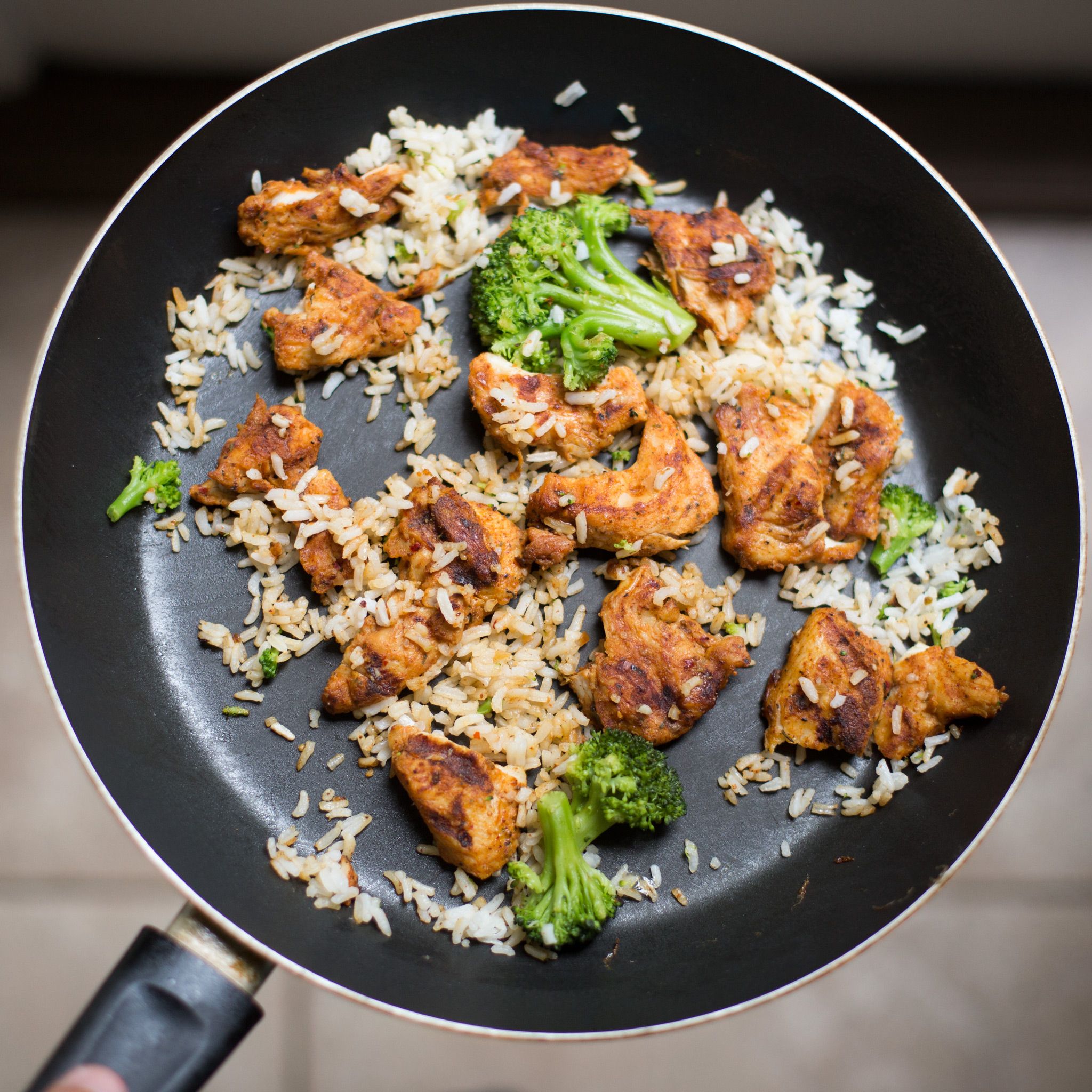
Try a build-your-own dinner
This is one reason bowls, tacos, wraps and sheet-pan meals are so useful on busy nights.
Instead of presenting one perfectly assembled plate, put the components on the table.
Think:
Taco night
- seasoned chicken or beans
- tortillas
- shredded cheese
- corn
- avocado
- salsa
- fruit
Rice bowl night
- rice
- chicken, tofu or beans
- frozen vegetables
- cucumber
- cheese or avocado
- sauce
Baked potato night
- potatoes
- beans or chicken
- cheese
- broccoli
- yogurt or another topping
Everyone can assemble dinner differently without you becoming a short-order cook.
And repeated exposure matters too. Research summarized by USDA suggests repeated opportunities to taste a food can increase acceptance, although the strongest evidence for the “8 to 10 times” idea comes from younger children rather than older school-age kids.
Source: USDA systematic review on repeated food exposure, 2019
So you don’t need to decide that your child “doesn’t like vegetables” because they rejected broccoli twice.
Keep offering it.
Without the courtroom drama.
Put the easy stuff on the table first
Here’s a small trick worth stealing:
Put fruit or a raw vegetable on the table while dinner is cooking.
It gives hungry kids something to eat while you’re finishing dinner, without requiring you to hand them a packaged snack that ruins dinner five minutes later.
There is even some interesting research behind the general idea of offering vegetables early in a meal. In one Penn State study of preschoolers, serving carrots before the main meal increased vegetable consumption. That doesn’t mean every family needs to serve carrots first, but it is a useful reminder that timing can influence what kids choose to eat.
Source: Penn State carrots first study, via ScienceDaily
And if your child eats the carrots while you finish dinner?
Excellent.
We are counting that as a win.
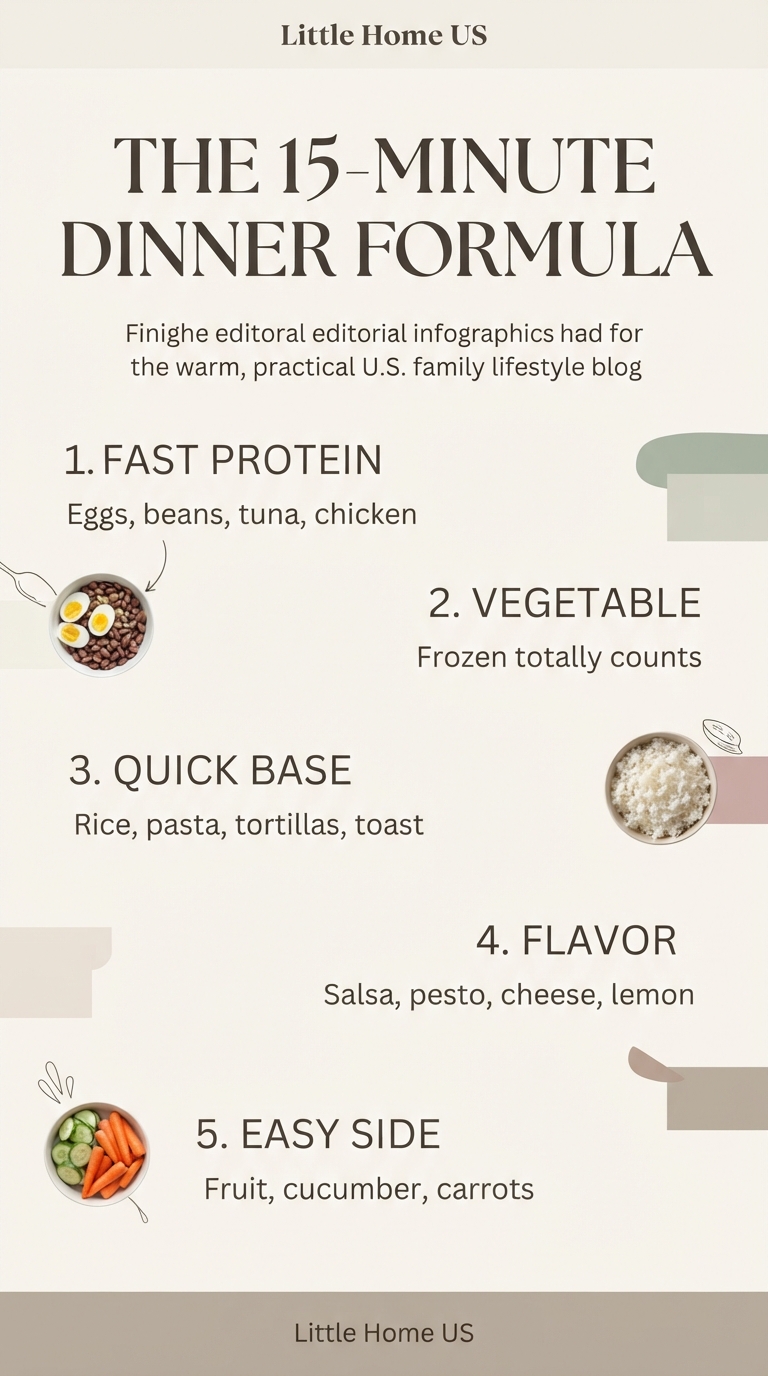
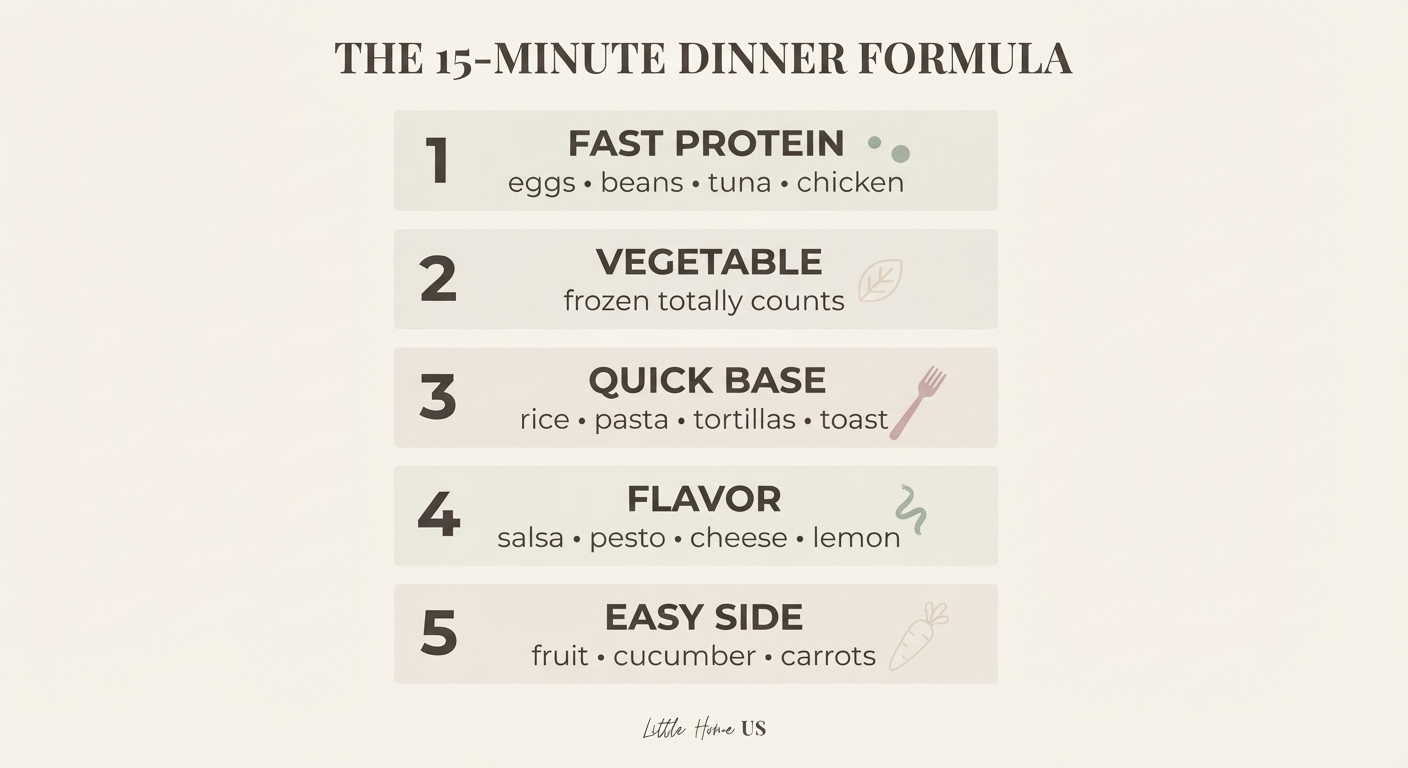
Your 15-minute school night dinner formula
For the nights when the day has completely gone sideways, use this formula:
1 fast protein + 1 vegetable + 1 quick base + 1 flavor booster + 1 fruit or raw vegetable
That’s it.
Fast proteins
Keep a few options around:
- eggs
- canned beans
- canned tuna or salmon
- rotisserie chicken
- frozen shrimp
- leftover cooked chicken
- cheese
- tofu
Frozen vegetables
Frozen peas, corn, broccoli, mixed vegetables and green beans can go straight into many meals.
Frozen does not automatically mean nutritionally inferior. One study comparing fresh, frozen and “fresh-stored” produce found that nutrient differences varied by nutrient and produce type, with frozen produce sometimes retaining more nutrients than produce that had been stored in the refrigerator for several days. The study was funded by the Frozen Food Foundation, so that funding should be kept in mind when interpreting the findings.
Source: Li et al., fresh versus frozen produce nutrient comparison, 2017
The bigger takeaway?
Frozen vegetables count.
You do not get extra parenting points for washing and chopping fresh broccoli at 5:45 PM.
Quick bases
Use whatever makes dinner happen:
- microwaveable rice
- leftover grains
- whole-wheat tortillas
- pasta
- toast
- potatoes
- couscous
Flavor boosters
This is what keeps the same basic ingredients from feeling like the same dinner.
Try:
- salsa
- pesto
- shredded cheese
- soy sauce
- lemon juice
- yogurt-based sauce
- avocado
- a simple vinaigrette
And suddenly yesterday’s chicken and rice have a completely different personality.
Five school night dinners for the “I have nothing planned” evenings
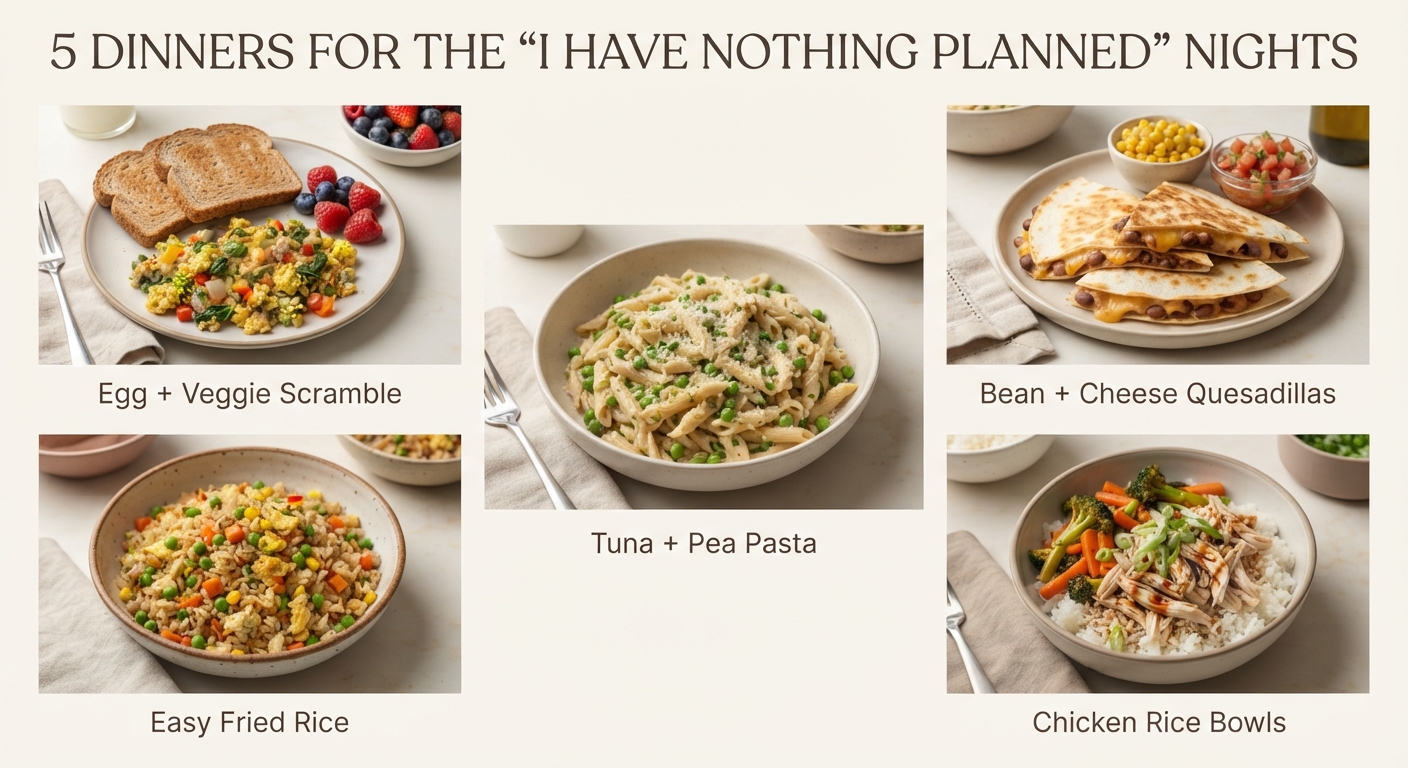
1. Egg and vegetable scramble
Scramble eggs with frozen vegetables.
Serve with toast and fruit.
That’s dinner.
You can add cheese, avocado or leftover roasted potatoes if you have them.
2. Bean and cheese quesadillas
Fill tortillas with canned beans and cheese.
Add frozen corn if you have it.
Cook until crisp and serve with salsa, avocado and fruit.
For younger children, modify foods appropriately for their developmental stage.

3. Tuna or white bean pasta
Cook pasta.
Stir through tuna or white beans, frozen peas and a little olive oil or pesto.
Add cheese if your family likes it.
This is especially useful when you have absolutely no interest in producing an elaborate sauce.
4. Weeknight fried rice
Use leftover rice, frozen vegetables and an egg.
Add soy sauce or another sauce your family likes.
This is exactly why cooking a little extra rice earlier in the week can be useful.
5. Rotisserie chicken bowls
Put rice, chicken and whatever vegetables you have into bowls.
Add cheese, avocado, salsa, dressing or another favorite topping.
Everyone makes their own.
No complicated recipe required.
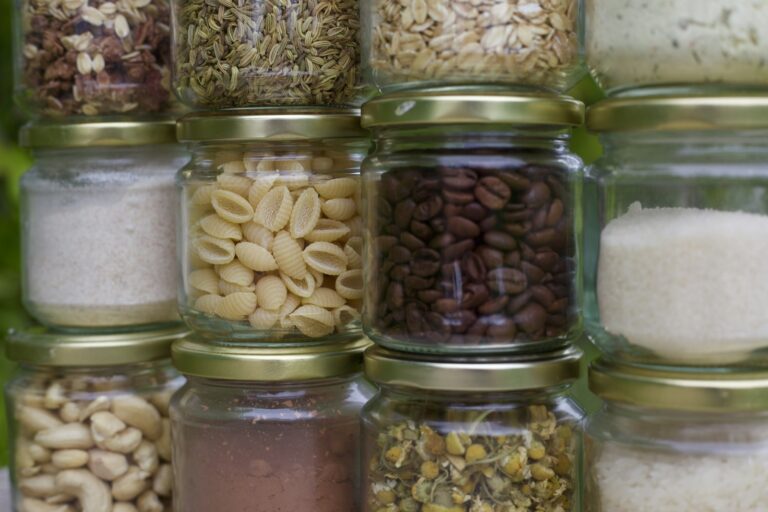
The pantry and freezer deserve a little more credit
Your emergency dinner ingredients do not need to look glamorous.
In fact, the less glamorous they are, the better.
A well-stocked pantry and freezer can turn “there is nothing to eat” into a 12-minute dinner.
Keep a few of these around:
Pantry
- canned beans
- canned tuna or salmon
- pasta
- rice
- tortillas
- tomato sauce
- canned tomatoes
- nut or seed butter, where appropriate for your family
Freezer
- frozen peas
- frozen corn
- frozen broccoli
- frozen mixed vegetables
- frozen fruit
- frozen shrimp
- leftover portions of cooked meals
Fridge
- eggs
- cheese
- yogurt
- carrots
- cucumbers
- fruit
- cooked leftovers
Canned beans are particularly useful. If sodium is a concern, draining and rinsing canned beans can cut their sodium content by about 41 percent. You lose a small amount of potassium and folate in the process, but the fiber stays.
Source: Tufts Health and Nutrition Letter: Rinsing canned beans
And eggs are one of those ingredients that quietly save dinner over and over again.
You can scramble them.
Put them in fried rice.
Add them to toast.
Turn them into an omelet.
Make breakfast for dinner.
There is no rule saying dinner has to look like dinner.
For more of what we keep stocked in the kitchen this time of year, see The Fall Drinks and Snacks I Actually Keep Stocked This Time of Year.
Don’t forget the freezer meal
If you know a particular week is going to be ridiculous, make one meal specifically for the freezer.
Good candidates include:
- soup
- chili
- pasta bake
- casserole
- cooked beans
- meatballs
- shredded chicken
This is where fully assembled meals can beat building blocks.
You are not trying to make Tuesday easier by doing more work on Sunday.
You are trying to make Tuesday easier later.
USDA says leftovers can generally be frozen for longer storage, with three to four months given as a quality guideline for many cooked leftovers.
The Sunday plan that doesn’t take over your Sunday
Meal planning does not have to mean sitting down with seven recipes and a color-coded spreadsheet.
A study of more than 40,000 French adults found that meal planning was associated with greater food variety, better adherence to dietary recommendations and lower odds of obesity. But it was an observational study, so it shows an association rather than proving that meal planning caused those outcomes.
Source: Ducrot et al., meal planning and diet quality study, 2017
So let’s keep the useful part without turning it into another productivity project.
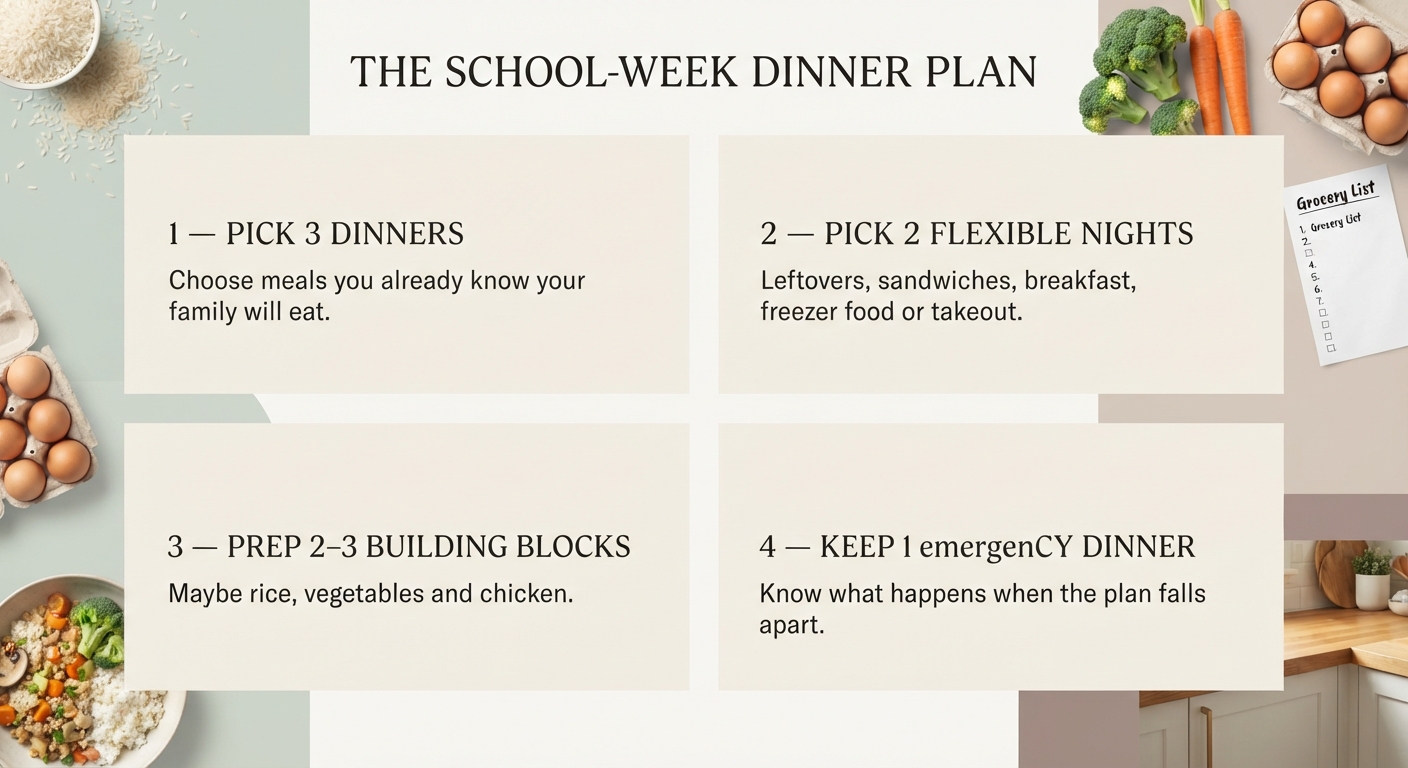
Try this:
Pick 3 dinners
Not seven.
Choose three dinners you know your family will actually eat.
Pick 2 flexible nights
These can be:
- leftovers
- breakfast for dinner
- quesadillas
- sandwiches
- pasta
- freezer food
- takeout
Prep 2 or 3 building blocks
Maybe rice, roasted vegetables and chicken.
Maybe beans, chopped vegetables and boiled eggs.
Maybe absolutely nothing because this week is already doing enough.
Keep 1 emergency dinner
Know what happens when the plan falls apart.
For example:
Eggs + toast + frozen vegetables + fruit.
That means you don’t have to invent dinner while everyone is hungry.
If Sunday is already your reset day for the rest of the house, this pairs well with our Realistic Sunday Reset Routine.
You don’t need to cook every night
The American Academy of Pediatrics notes that family meals do not have to be elaborate or even homemade. Sandwiches, leftovers and other simple meals count, and the AAP suggests aiming for shared meals around three times a week when possible.
Source: HealthyChildren.org (AAP): Family meals
That’s worth remembering when Instagram makes family dinner look like a nightly event.
A family meal can be:
- leftover pasta
- sandwiches
- breakfast
- soup from the freezer
- tacos assembled at the counter
The point is having a chance to eat together when your schedule allows—not proving that you have mastered dinner.

And yes, sometimes dinner will be takeout
There is no need to turn takeout into a moral failure.
CDC data from August 2021 through August 2023 found that 30.1% of U.S. children and adolescents ages 2–19 consumed fast food on a given day.
Source: CDC NCHS: Fast food consumption among children and adolescents
One rushed Tuesday does not cancel out the rest of the week’s meals.
If takeout is what gets everyone fed and to bed on time, that is information about your evening—not evidence that you have failed at meal planning.
The better goal is to have enough easy options around that takeout is a choice rather than the only thing standing between your family and a hungry meltdown.
A realistic school night dinner rhythm
If you want something even simpler, try this:
- Sunday: Plan three dinners. Prep one or two building blocks.
- Monday: Use one of your planned meals.
- Tuesday: Turn leftovers or building blocks into something different.
- Wednesday: Use your emergency dinner or a freezer meal.
- Thursday: Make another planned dinner.
- Friday: Keep it flexible.
That is enough.
You don’t need a Pinterest-worthy meal plan taped to your fridge.
You need a plan that still works when someone has soccer practice, someone forgot their homework, and you realize at 6:12 PM that the chicken you thought was in the freezer is actually nowhere to be found.
One last thing: make dinner easier, not more impressive
The best school night dinners are not necessarily the healthiest-looking meals on the internet.
They’re the meals you can actually make.
A bowl with rice, beans, frozen corn, avocado and salsa counts.
Eggs, toast and fruit count.
Leftover chicken turned into tacos counts.
A sandwich and some fruit counts.
And yes, the frozen vegetables you dumped into the pan at the last minute count.
If your weeknight dinner system helps you put a reasonably balanced meal on the table without spending your entire Sunday preparing for it, it’s doing its job.
That’s really the point.
Dinner doesn’t need to be another thing you have to perfect. It just needs to be something you can keep doing.
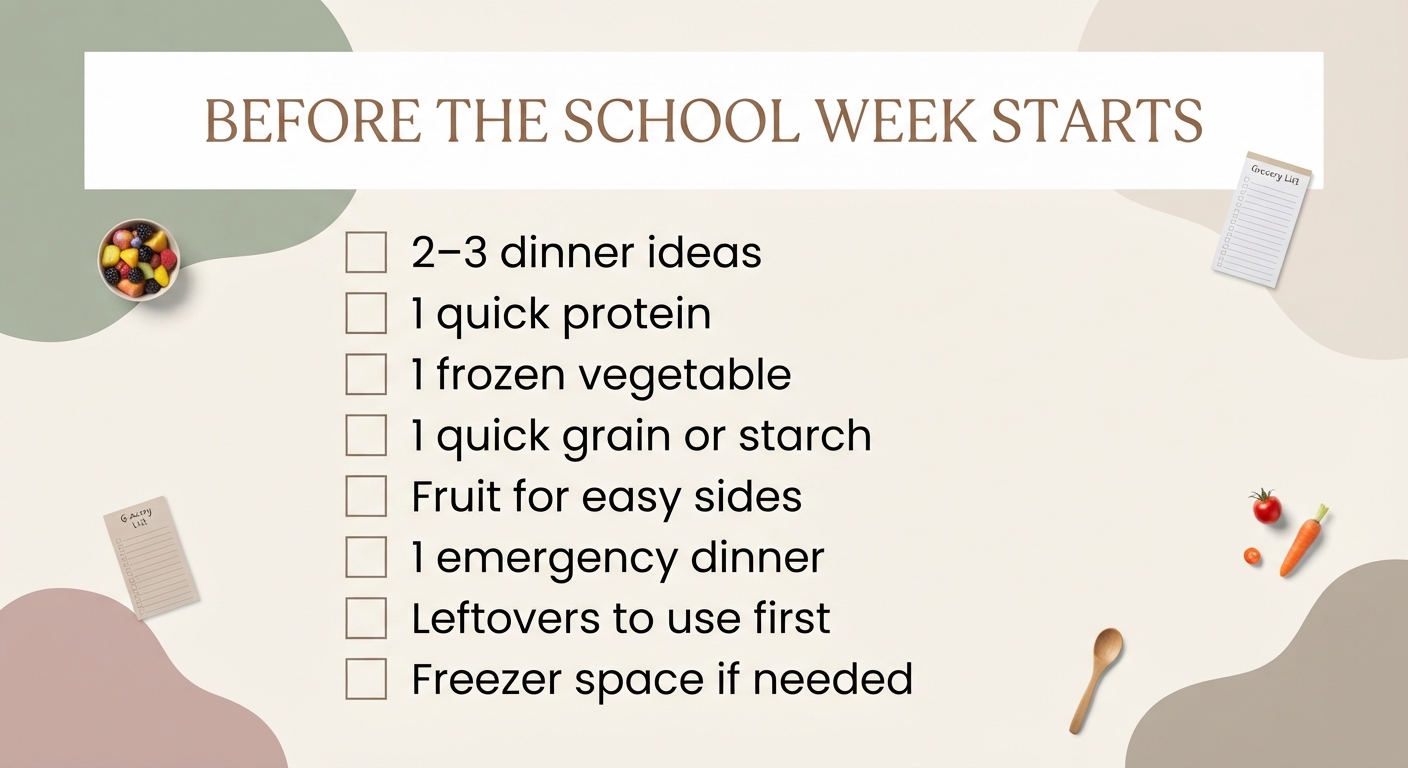
Quick school night dinner checklist
Before the school week starts, check:
- I have 2–3 dinner ideas in mind.
- I have at least one quick protein.
- I have a frozen vegetable.
- I have a quick grain or starch.
- I have fruit for easy sides.
- I have one emergency dinner.
- I know what leftovers need to be eaten first.
- I have freezer space for anything I won’t eat within a few days.
That’s your meal plan. It is also how nutrient-dense school night dinners come together most weeks around here.
No matching containers required.

More from Little Home US
If you like this one, these may help: The Cookware Guide, Glass vs Plastic Storage, What Is PFAS?.