Reusable Water Bottles: Stainless Steel, Glass or Plastic?
This post may contain affiliate links. If you buy through them I may earn a small commission at no extra cost to you.
I have a feeling most of us own at least one reusable water bottle we don’t use anymore. Maybe it leaks, doesn’t keep water cold, has a lid that’s hard to clean, or simply got replaced by a prettier one. And if you’re trying to drink more water, you might be thinking about getting a new one.
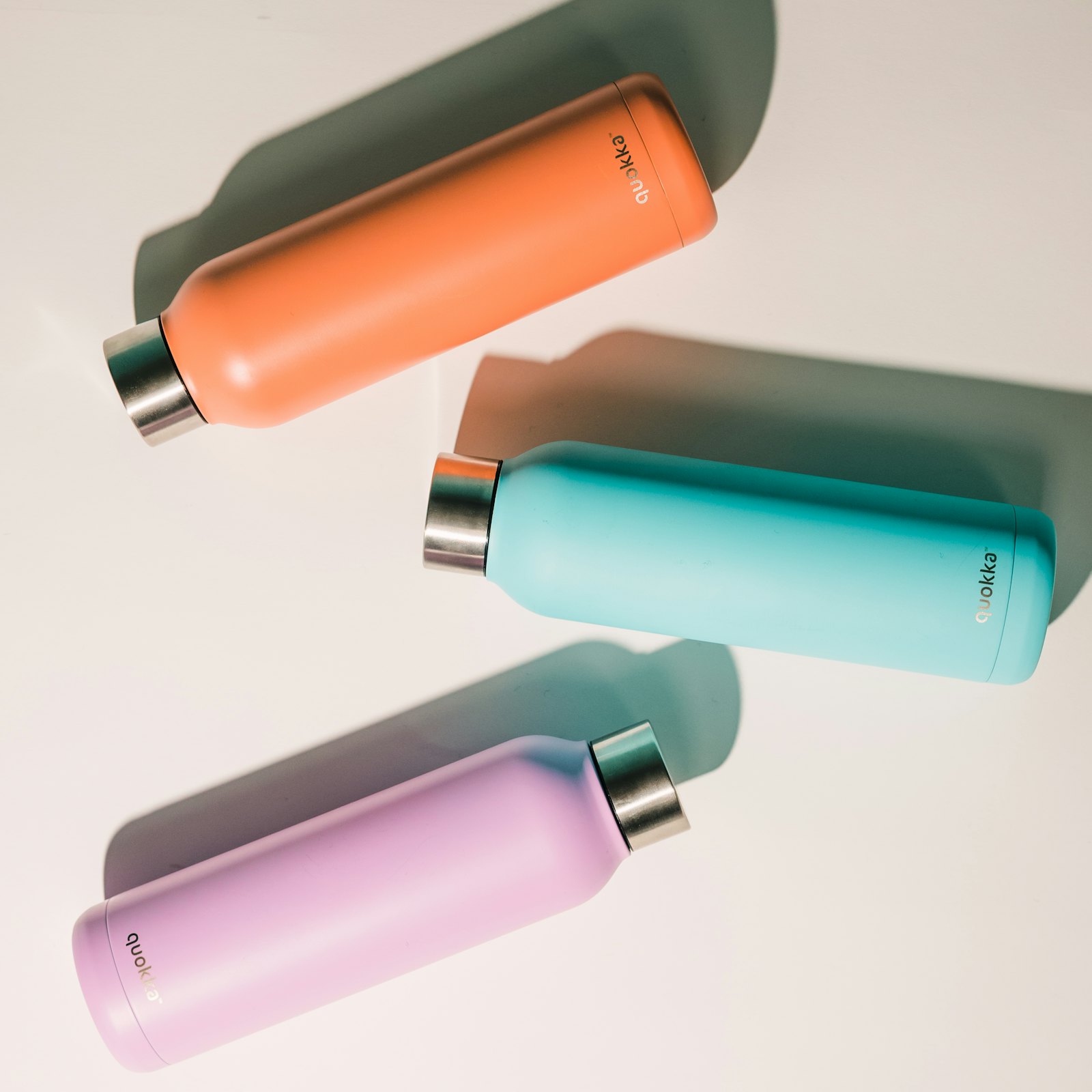
There are plenty of options now. Stainless steel bottles are popular for their insulated designs, glass bottles have a simple, clean look, and plastic bottles are still some of the easiest and most affordable to carry around.
But is one material actually better than the others? If you’re trying to reduce unnecessary plastic contact with your drinks, it’s worth understanding what these bottles are made of and how they hold up with everyday use. Let’s compare the three.
Stainless steel is a practical everyday pick, glass is lovely for home or the desk, and plastic can still work if it is in good shape. Whatever the material, check the lid and seals, choose a bottle that is easy to clean and replace it when it gets damaged.
- Why Does Your Water Bottle Material Matter?
- Stainless Steel Water Bottles
- Glass Water Bottles
- Plastic Water Bottles
- Stainless Steel vs Glass vs Plastic: A Quick Comparison
- How to Choose a Better Water Bottle
- How to Care for Your Reusable Water Bottle
- So, Which Water Bottle Would I Choose?
- Frequently Asked Questions
- A Final Thought
Why Does Your Water Bottle Material Matter?
A reusable water bottle is something you might use several times a day. You fill it in the morning, take it to work, carry it in your bag and leave it on your bedside table. Because it touches your drinking water so often, the material is worth a thought.
Plastic bottles can release tiny particles as the material ages or goes through repeated physical stress. Research has also found microplastics and nanoplastics in bottled drinking water. A 2024 study in the Proceedings of the National Academy of Sciences looked at three popular bottled water brands and detected an average of roughly 240,000 plastic particles per liter, most of them nanoplastics.
It’s an interesting finding, but it needs context. The study looked at single use bottled water, not every reusable plastic bottle on the market, and it did not show that those particle levels cause a particular illness. The FDA has also noted that microplastics have been detected in bottled and other drinking water, but current evidence has not established that the levels found pose a human health risk.
So if you’re thinking about moving away from plastic, treat it as a material preference and a way to reduce one possible source of exposure, not a reason to worry about every bottle you’ve ever used.
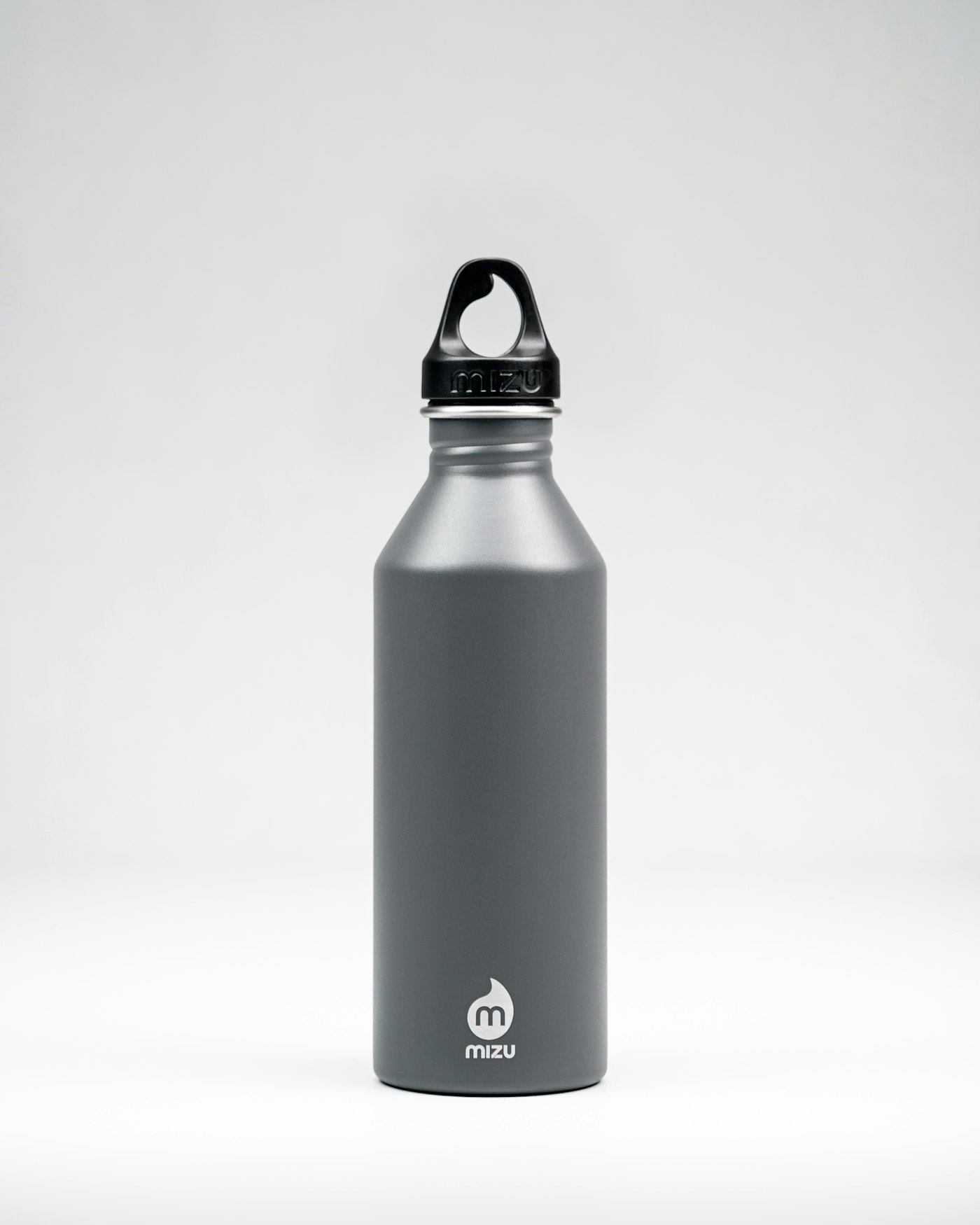
Stainless Steel Water Bottles
If you’ve been looking at reusable bottles lately, you’ve probably noticed how many stainless steel options there are. They’re popular for a reason. Stainless steel is durable, doesn’t hold onto flavors as easily as some materials and can keep drinks cold or hot in a properly insulated design.
What type of stainless steel should you look for?
You’ll often see bottles described as 18/8 or 304 stainless steel. Those terms refer to the composition. 304 stainless, commonly called 18/8, contains roughly 18% chromium and 8% nickel and is widely used in food contact applications because it resists corrosion well. You may also see 316, which contains molybdenum for extra resistance to certain kinds of corrosion.
Both can be suitable for drinking bottles when properly made. I wouldn’t automatically pay more for 316 over 304. The overall construction, lid quality, finish and what the maker tells you matter too.
What about lead in stainless steel bottles?
This has had a lot of attention online, particularly for insulated bottles. Some vacuum insulated products use a small sealing component during manufacturing, and depending on the design, a lead containing material may be present at a sealed point on the exterior base.
That is not the same as saying every stainless steel bottle contains lead or that the drinking surface is made with lead. The useful questions are where the material is, whether it is properly enclosed, and whether it can touch you or your water. If you’re shopping for an insulated bottle, look for makers that share clear information about materials, construction and heavy metal testing. If a sealing area on the base is exposed or damaged, contact the maker rather than assuming it’s fine to keep using.
What I like about stainless steel
- It’s durable enough for everyday use.
- Double wall insulation helps keep drinks cold or hot.
- It doesn’t have the plastic body of a conventional plastic bottle.
- It comes in lots of sizes and designs.
- It can be a long lasting purchase when cared for.
What to consider before buying
Stainless steel bottles can be heavier than plastic ones, especially larger insulated sizes. Some have complicated lids with straws, rubber seals and small parts that need regular cleaning. And while the body may be steel, the lid and spout can still contain plastic or silicone, so check the whole bottle if you’re trying to reduce plastic contact.
Glass Water Bottles
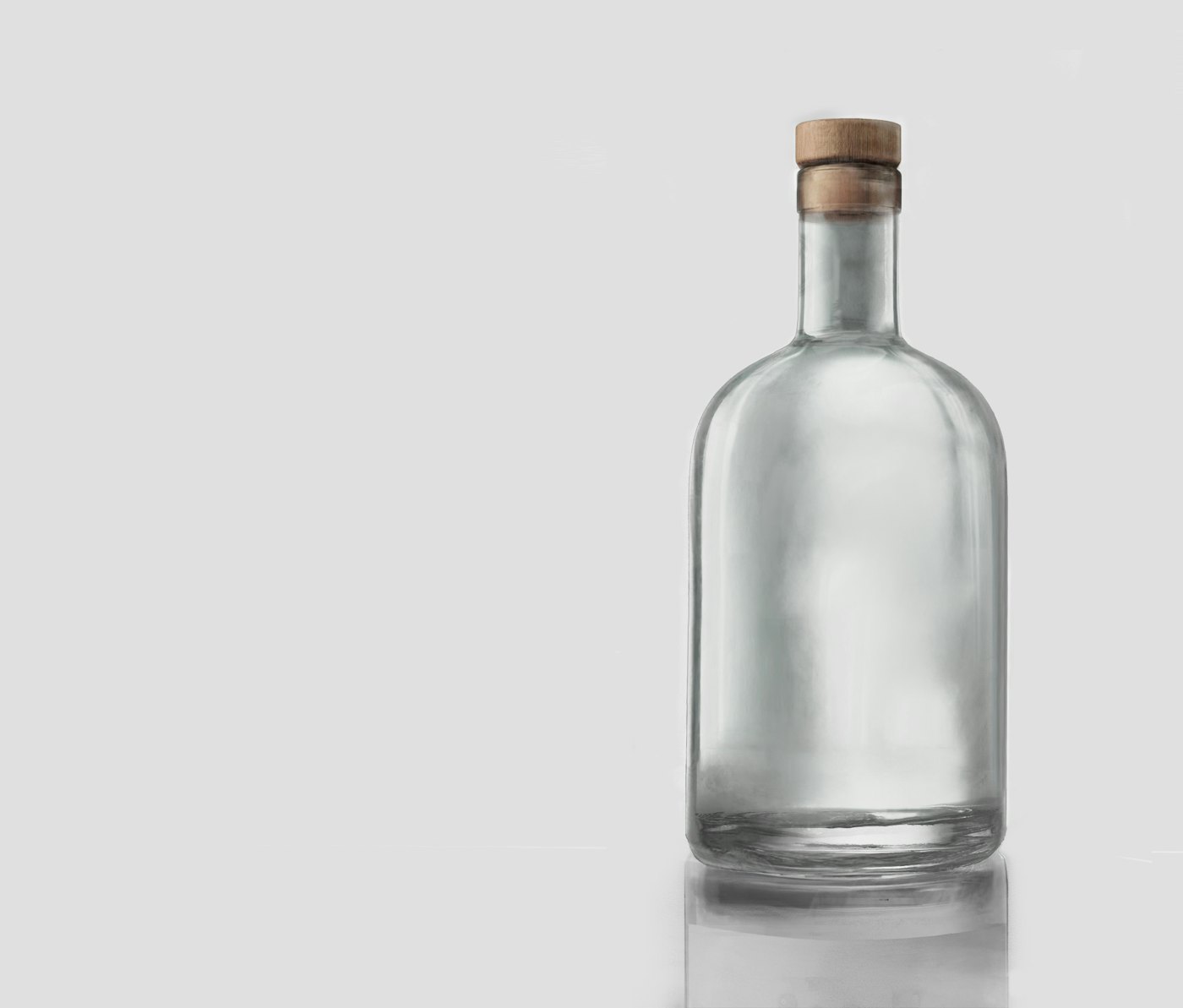
There’s something about a glass bottle that makes drinking water feel a little nicer. It’s simple, doesn’t hold onto old flavors the way some plastics can, and lets you see exactly how much is left.
Is glass better than stainless steel?
They each have their advantages. Plain, food contact rated glass is generally stable under normal drinking water conditions and doesn’t need an inner coating. It’s easy to clean, and there’s no rust to worry about.
The obvious downside is that glass can break. If you drop it on a hard floor, it may crack or shatter, which makes it less convenient for the gym or a busy bag. A silicone sleeve can help with small knocks, but it doesn’t make glass unbreakable.
What should you look for in a glass bottle?
- A bottle designed for drinking water.
- Food contact rated glass.
- A protective silicone sleeve, if you’re hard on your things.
- Lids with as few plastic parts as possible.
- An opening wide enough to clean easily.
- The maker’s instructions for hot and cold liquids.
Borosilicate glass is another option you’ll see. It’s designed to handle temperature changes better than ordinary glass, although it can still break if dropped or pushed beyond what it was designed for.
Plastic Water Bottles
Plastic bottles aren’t automatically a bad choice. They’re lightweight, affordable and convenient, which is why they’re still so common. The thing to remember is that plastic isn’t one material. Different bottles use different polymers, and how suitable they are depends on how they’re made and what they’re designed to hold.
What does BPA free actually mean?
BPA is short for bisphenol A, a chemical that has been used in certain plastics. Some makers moved to BPA free plastics in response to consumer concerns. But BPA free doesn’t tell you everything. It doesn’t automatically mean the product has no other bisphenols, such as BPS or BPF, or no other additives, and it doesn’t mean there is no chemical migration at all.
That doesn’t make every BPA free bottle a problem. It just means the label describes one chemical, not the full makeup of the product. If you prefer plastic, buy from a reputable maker, check that the bottle is meant for repeated food contact and follow its care instructions.
What about microplastics?
A bottle goes through squeezing, scratching, washing, temperature changes and general wear, and those conditions can affect the material over time. The science on microplastic exposure is still developing. The FDA has said that the presence of microplastics in food or water alone does not establish a health risk. Still, if you want to lean on plastic less, a glass or stainless steel bottle is a reasonable option.
When should you replace a plastic bottle?
Replace it if it becomes cracked, deeply scratched, damaged or hard to clean. Avoid exposing it to heat unless the maker says it’s suitable, and don’t leave one in a hot car for long stretches.
Stainless Steel vs Glass vs Plastic: A Quick Comparison
| Feature | Stainless Steel | Glass | Plastic |
|---|---|---|---|
| Durability | Generally excellent | Can break | Varies by type |
| Weight | Moderate to heavy | Moderate | Lightweight |
| Temperature retention | Excellent when insulated | Usually limited | Usually limited |
| Taste | Generally neutral | Generally neutral | Depends on material and condition |
| Plastic components | Often in lids and seals | Often in lids and seals | Main bottle material |
| Cleaning | Depends on lid design | Usually straightforward | Depends on design |
| Price | Moderate to high | Low to moderate | Usually affordable |
| Best for | Everyday use and travel | Home, office and gentle use | Lightweight everyday carrying |
How to Choose a Better Water Bottle
Rather than getting caught up in which material is supposedly best, think about how you actually use your bottle.
Check the entire construction
Don’t stop at the material in the product title. A steel bottle may have a plastic lid, silicone seal and plastic straw, and a glass bottle may have a plastic spout. Read the full product description and see whether the maker covers all the parts.
Choose a bottle that’s easy to clean
A bottle can be made from a material you like and still be unpleasant to use if the lid is hard to clean. Look for removable seals, accessible openings and parts that come apart, especially if there’s a straw.
Think about size
A huge bottle might look impressive, but it isn’t always practical. If you carry a handbag or commute, a smaller bottle may suit you better. If you sit at a desk all day, a larger insulated one might make sense. Choose something you’ll actually carry and refill.
Look for clear product information
A trustworthy maker should be able to tell you what the bottle is made from, what the lid and seals contain, whether it’s meant for hot or cold drinks, how to clean it and whether it has been tested for applicable food contact requirements. Be cautious of vague claims like chemical free or completely toxin free. No material needs exaggerated promises to be a good product.
The swaps
| Instead of | Try | Look for |
|---|---|---|
| Scratched or cloudy plastic bottle | Stainless steel or glass bottle with a simple lid | Full parts list, removable seals, wide opening |
| Bottle with a hard to clean straw lid | A lid that comes apart for washing | Parts you can reach with a brush |
How to Care for Your Reusable Water Bottle
Whichever material you choose, cleaning matters. A bottle can develop smells or residue if it’s left closed while damp or isn’t washed regularly.
Wash it regularly. Use warm water and dish soap, following the maker’s instructions.
Clean the lid separately. Pay attention to threads, straws, seals and small spaces where moisture collects.
Let it dry completely. Leave it open after washing so the inside can air dry.
Don’t leave old water sitting in it. Empty it and refill with fresh water.
Skip harsh cleaning methods. Abrasive scrubbers and unsuitable chemicals can damage finishes and parts.
If you use your bottle for smoothies, juice or flavored drinks, rinse it promptly rather than leaving residue inside.
So, Which Water Bottle Would I Choose?
If I were buying a reusable bottle for everyday use, I’d probably start with stainless steel. It’s durable, practical and keeps cold water cold through the day. I’d look for a simple design, a reputable maker, clear information about the steel and a lid without too many hard to clean parts.
If I mainly wanted a bottle for home or my desk, I’d happily consider glass. And if I needed something very light and affordable, I’d still consider a good quality reusable plastic bottle rather than treating plastic as something you must never use.
The best bottle is one that suits your routine, is easy to look after and is made from materials you feel comfortable with.
What the research says
A 2024 study in PNAS found hundreds of thousands of plastic particles per liter in some bottled water, mostly nanoplastics. The FDA says detecting microplastics in food or water does not by itself show a health risk. Both points are why this guide treats plastic as a preference to weigh, not a panic. Related: lead free dinnerware and glass vs plastic food storage.
Frequently Asked Questions
What is the best non toxic water bottle without plastic?
A glass bottle with a simple lid or a well made stainless steel bottle with minimal plastic parts is a good starting point. Check the full construction, including the cap, seal and spout.
Is stainless steel better than plastic for drinking water?
Stainless steel avoids having a plastic bottle body in contact with your water. Quality, manufacturing and the other components still matter, so food contact rated stainless steel from a reputable maker is a practical choice.
Is 18/8 stainless steel the same as 304?
Yes. The terms are commonly used interchangeably for stainless steel with roughly 18% chromium and 8% nickel.
Are BPA free plastic bottles okay to use?
BPA free means the product is made without BPA, but it doesn’t necessarily mean it is free from every other chemical of concern. Choose bottles meant for repeated food contact and follow the maker’s instructions.
Do stainless steel bottles contain lead?
Some insulated designs may use lead containing materials in an exterior sealing component. That is not true of every bottle. Ask the maker about its construction, lead testing and whether any sealing materials are fully enclosed.
How often should I replace my reusable bottle?
There’s no universal schedule. A well kept stainless steel or glass bottle can last for years. Replace bottles that become damaged, cracked, corroded or hard to clean, and swap worn lids and seals as needed.
A Final Thought
A reusable water bottle is a small purchase, but you use it all the time. You don’t need the most expensive one or the one everyone seems to carry on social media. Choose a material that fits your routine, check what the product is actually made of and take care of it once it’s home.
Sometimes a better choice is simply buying something you can use comfortably for years instead of replacing it every few months.
Where to Read More
- PNAS: rapid single particle chemical imaging of nanoplastics (2024 bottled water study)
- FDA: microplastics and nanoplastics in foods
Pages change over time, so check the current version.
Products to look at
- Hydro Flask Stainless Steel Wide Mouth Bottle with Flex Cap
An insulated stainless steel bottle with a wide opening for easy cleaning. - Ello Syndicate 20oz Glass Water Bottle with Flip Lid and Sleeve
A glass bottle with a silicone sleeve for small knocks.
As an Amazon Associate I earn from qualifying purchases.
Keep reading
- Lead free dinnerware: how to check your plates and mugs
- Non toxic food storage: glass vs plastic
- The safest cookware guide
- How to read any cleaning product label in one minute
- The free Non Toxic Home Starter Checklist
Grab the free Non Toxic Home Starter Checklist.